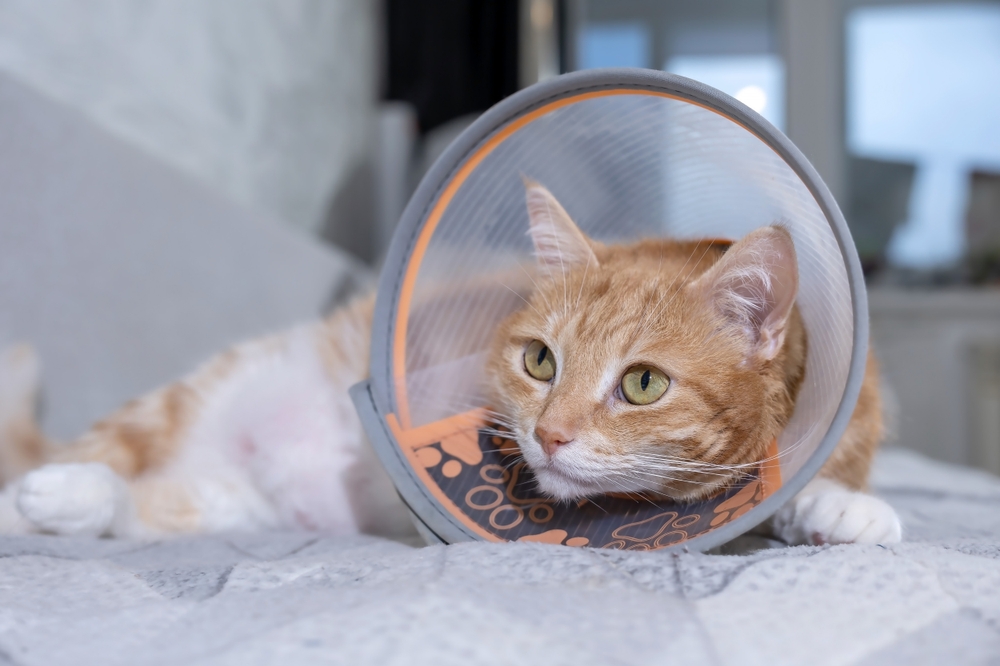
Your pet needs surgery when a condition cannot be managed any other way, and most of the time that decision is clearer than it sounds from the outside. For some conditions, surgery is genuinely the best or only path to recovery. For others, it is one option among several, and the right choice depends on your pet’s age, overall health, the nature of the problem, and what you are trying to achieve for their quality of life.
At State of the Heart Veterinary Care in Denver, we perform soft tissue surgeries in-house, including laparoscopic spay and gastropexy, and we bring in visiting specialists for orthopedic procedures when that level of expertise is what your pet needs. Every surgical conversation starts with a thorough workup so we are recommending only what is actually indicated. If your pet is facing a procedure or you just want to understand the options in front of you, get in touch with us and we will help you think through it clearly.
Pet Surgery at a Glance
- Surgery is for what cannot be managed otherwise: a careful workup determines whether that is actually the case.
- Modern anesthesia is safe: when paired with pre-anesthetic bloodwork, individualized protocols, and continuous monitoring.
- Recovery depends on home care: post-op care matters as much as the procedure itself.
- Most common surgeries are routine: spay/neuter, mass removal, dental, foreign body, and cystotomy, while complex orthopedic and oncologic cases sometimes warrant specialty involvement.
What Are the Categories of Common Pet Surgeries?
Surgeries break into broad categories that help frame the conversation, with age, breed, lifestyle, and medical history shaping how each is approached.
| Surgery category | Examples |
| Essential and preventive | Spay, neuter, gastropexy in at-risk breeds |
| Orthopedic | Cruciate repair, fracture fixation, FHO, patella surgery |
| Soft tissue | Mass removal, foreign body retrieval, bladder stones, splenectomy |
| Dental | Extractions for fractured or resorbing teeth, oral mass removal |
| Cancer-related | Mass excision with margins, sometimes followed by referral |
| Brachycephalic airway | Soft palate resection, stenotic nares correction |
| Wound and abscess care | Lacerations, bite wounds, abscess drainage |
Our wellness examinations catch many conditions before they become surgical, and when surgery does become part of the picture, the workup that follows ensures we are recommending the right procedure for the right reasons.
What Should You Know About Spaying and Neutering?
Spay and neuter procedures are among the most common surgeries in veterinary medicine and one of the most beneficial for long-term health. The case for spaying and neutering is concrete: for females, it eliminates the risk of pyometra, substantially reduces mammary cancer risk when done before the first heat cycle, and prevents unwanted pregnancy; for males, it eliminates testicular cancer risk, reduces certain prostate problems, and often dials back roaming and some unwanted behaviors.
Timing matters and is breed-dependent, since some larger breeds benefit from waiting until skeletal maturity at 12 to 18 months to reduce orthopedic disease risk, while small breeds often do well with earlier timing. We discuss the right timing during a pre-surgical consultation. State of the Heart offers laparoscopic spay in Denver, which uses small incisions and specialized cameras to reduce post-op pain and recovery time, and laparoscopic gastropexy for deep-chested breeds at risk of bloat is often performed at the same time.
What Are the Cruciate Ligament Repair Options?
Cruciate ligament injuries are among the most common orthopedic conditions in dogs, since the cranial cruciate ligament stabilizes the stifle joint and a tear leaves the joint mechanically unstable with every step. Conservative management rarely restores function in medium to large dogs, so surgery is consistently the better path. The main approaches:
- TPLO (Tibial Plateau Leveling Osteotomy), which changes the joint geometry so the CCL is no longer needed, the most common procedure for medium and larger dogs per TPLO surgery, performed at our practice by our visiting board-certified orthopedic surgeon.
- TTA (Tibial Tuberosity Advancement), an alternative osteotomy with similar principles.
- Extracapsular repair (lateral suture), generally reserved for smaller dogs.
We have a board-certified orthopedic surgeon who comes directly to State of the Heart to perform CCL repairs. Recovery from any cruciate procedure runs 12 to 16 weeks with structured rehabilitation: strict crate rest the first two weeks, gradual leash walks weeks 3 through 8, and progressive return to activity through week 12. Rushing rehabilitation undoes the surgery, and our digital radiology and recheck schedule keep recovery on track.
How Are Fractures and Amputations Handled?
Broken bones are common in dogs and cats. A fall from the top of the stairs, rough tumble on a trail, accidentally being shut in a door or stepped on, or any other trauma can fracture a bone, especially in young, elderly, and toy breeds. Fractures are evaluated by location, severity, and bone quality, since simple closed fractures in young dogs often repair beautifully with plates, screws, or pins, while comminuted fractures, joint-involving fractures, and fractures in pets with bone disease are more complex and may need a specialist to come in. Fractures usually heal within 6 to 12 weeks and require confined activity throughout the process.
When limb-sparing is not feasible due to severe trauma, untreatable bone cancer, or intractable pain, amputation surgery becomes part of the conversation. Three-legged pets adapt remarkably well in most cases, with significantly reduced pain and good quality of life, and the post-amputation outcome is often better than continued attempts to save a non-functional limb. For acute trauma, our urgent pet care provides same-day evaluation and stabilization and can handle many urgently needed surgeries same-day.
What Are the Warning Signs of a GI Obstruction?
Dogs and cats swallow things they should not, commonly socks, hair ties, string and yarn, bones, corn cobs, peach pits, and small toys, and the risk depends on the object, the size, and where it ends up. Foreign body obstructions become emergencies when the object cannot pass. Hallmark symptoms:
- Persistent vomiting, especially after eating or drinking
- Anorexia, or refusal to eat
- Lethargy progressing over hours
- Straining to defecate with little or no production
- Abdominal pain, shown as hunched posture, reluctance to be touched, or vocalization
- Linear foreign body signs, like string under the tongue in cats or trailing from the rectum, which you should never pull
Diagnostics typically start with radiology, sometimes followed by contrast studies or ultrasound. Surgical removal is standard for objects too large to pass, while endoscopic removal works for objects in the stomach or proximal esophagus. Early intervention dramatically improves outcomes, since advanced obstructions can cause intestinal tissue death within hours, so if you saw or suspect ingestion, do not wait for symptoms. Foreign body surgeries are something we perform often, with a specialist who can come to our hospital for endoscopy for select cases.
How Are Mass Removals and Cancer Surgery Approached?
A new lump or mass warrants evaluation, ideally with fine-needle aspiration before any surgical decision, since the types of cancer in pets range from straightforward benign masses to aggressive cancers requiring careful planning. Key principles:
- Diagnosis first, since cytology or biopsy guides whether surgery is needed and how aggressive it should be.
- Margins matter, since cancers like soft tissue sarcoma and mast cell tumors do far better with wide margins on the first surgery than a small surgery and a second-look.
- Pathology completes the picture, telling us what was removed, whether margins were clean, and whether further treatment is recommended.
- Specialty input when warranted, since some cancers benefit from oncology consultation for chemotherapy, radiation, or targeted therapy.
We perform mass removals routinely in our surgical suites and coordinate specialty referral for cases needing radiation oncology or advanced surgical planning.
When Does a Pet Need Dental Surgery?
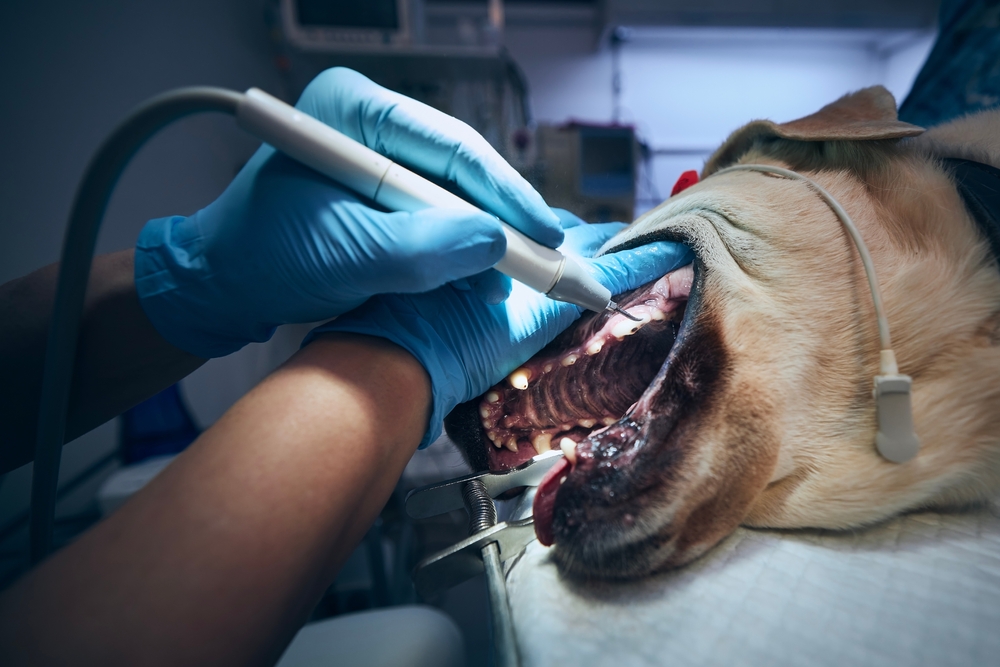
Fractured teeth are common, especially in dogs who chew hard items, and when a fracture exposes the pulp cavity the tooth becomes painful and prone to infection. The two main options are root canal therapy, which preserves tooth structure and is best for strategic teeth when oral surgery expertise is available, and extraction, which removes the painful tooth and is the standard approach for non-strategic teeth in general practice. Extraction is the most common method of treatment, and most affordable.
Other oral conditions that may need surgery include retained deciduous teeth, oral masses, severe periodontal disease with bone loss, and resorptive lesions in cats. Our dental procedures include digital dental radiography, ultrasonic cleaning, and oral surgery under appropriate anesthesia with monitoring. Routine dental exams catch problems early, since a tooth with a small fracture caught early can sometimes be saved with a sealant, while the same tooth six months later may need extraction.
How Are Bladder Stones Treated?
Urinary stones form in some pets due to diet, infection, breed predisposition, or metabolic conditions, causing discomfort, contributing to chronic urinary tract infections, and in male animals causing life-threatening urethral obstruction. Cystotomy is the surgical opening of the bladder to remove stones. Miniature Schnauzers, Bichons, Shih Tzus, Yorkies, Bulldogs, Dalmatians, and Miniature Poodles are all more prone to bladder stones.
Signs that should prompt evaluation:
- Frequent attempts to urinate with small or no production
- Blood in the urine
- Straining or vocalizing during urination
- Inappropriate urination in a previously trained pet
- Lethargy and vomiting, which suggest obstruction and an emergency
A blocked male cat or dog is a true emergency, since the bladder can rupture and the toxins from blocked urine cause rapid systemic illness, so get to a clinic immediately if your pet cannot urinate. After cystotomy, the stones are sent for analysis to identify their composition, which guides dietary changes and follow-up to prevent recurrence.
What Is Brachycephalic Airway Surgery?
Brachycephalic dogs like Bulldogs, French Bulldogs, Pugs, Boston Terriers, and Boxers have anatomic features that compromise airflow:
- Stenotic nares, or narrowed nostrils that restrict airflow
- Elongated soft palate that extends into the airway and partially obstructs it
- Everted laryngeal saccules, tissue pulled into the airway during breathing
- Hypoplastic trachea, a narrowed windpipe in some patients
Surgical correction of stenotic nares and soft palate elongation, ideally done young, dramatically improves quality of life and reduces heat stress risk, while lifestyle adjustments like weight management, avoiding heat, and careful sedation remain important alongside surgery. Recovery is generally rapid, with most dogs noticeably more comfortable within days. We’ll keep a close eye on any flat-faced puppy or kitten as they age and go over the process in detail if we recommend surgical revision to help them breathe better.
How Are Wounds and Abscesses Repaired?
Every pet gets into trouble at some point; catching a stray wire on a fence, getting into a tussle with another pet, or falling wrong on a stick. Cuts, punctures, and abscesses look minor more often than they are:
- Lacerations: need cleaning, possible debridement, and closure.
- Puncture wounds, especially bite wounds in dogs: often look smaller than they are, since the puncture is the visible part but extensive tissue damage and bacteria are deeper inside.
- Bite injuries in cats: almost always involve abscess formation, because cat mouths seal puncture wounds quickly and trap bacteria. Cat-fight abscesses typically show up 3 to 5 days later with swelling, pain, and often drainage, needing antibiotics, drainage, and sometimes surgical exploration.
For any wound, the right answers come from looking at it, and our same-day sick visits handle most wounds; the conversation about sutures, drains, or hospitalization happens in person.
What Does Post-Operative Care Involve?
Universal post-op priorities apply across procedures:
- Pain control: taking medications as prescribed without skipping doses, since post-surgical pain medication is for prevention, not just response.
- Restricted activity: often 10 to 14 days for soft tissue and 12 to 16 weeks for orthopedic, since rushing recovery causes setbacks.
- Incision monitoring: daily checks, where mild redness and slight bruising are normal but significant swelling, discharge, opening, or odor are not.
- E-collar use for the directed duration: licking and chewing cause infections and dehiscence.
- Environmental setup: a confined area with comfortable bedding, easy water access, and no stairs if mobility is restricted.
- Knowing when to call: persistent vomiting, refusal to eat over 24 hours, incision changes, severe lethargy, or suspected dehiscence.
For orthopedic cases, structured rehabilitation and home exercises dramatically improve long-term function, and we can give you recommendations to facilities we trust.
How Do You Partner With Your Vet Team Around Surgery?
The complete workflow for any surgery follows a clear sequence:
- Pre-op exam, a thorough physical, history review, and discussion of options.
- Diagnostics, including bloodwork, imaging, and sometimes specialty consultation.
- Surgical plan and informed consent, covering what is being done, what to expect, and what recovery looks like.
- Anesthetic planning, individualized to age, weight, health, and procedure.
- The procedure itself, with continuous monitoring of vital signs.
- Recovery monitoring, until the patient is awake and stable.
- Discharge with written instructions, plus a verbal walk-through and time for questions.
- Pain management at home, typically a multimodal approach.
- Follow-up exams for suture removal, recheck of healing, and longer-term monitoring.
We understand that the price tag that comes with some surgical procedures can be hard to manage. We offer transparent pricing, will go through estimates with you before anything is done, and offer flexible payment plans to spread costs over time. Our services and surgical capabilities are built around partnership, not transactions.
Making Informed Decisions for Long-Term Pet Wellbeing
When a surgery is indicated, it almost always improves comfort, function, mobility, and lifespan. The decision is rarely about whether surgery is the right answer in isolation; it is about timing, approach, and how to set the patient up for the best possible recovery. Early evaluation when symptoms appear, timely scheduling for preventive procedures, and clear communication with the team drive successful outcomes.
If your pet needs surgery in Denver, is recovering from one, or you just have questions about what comes next, request an appointment or call us. Our team and Dr. Daughtry are here to work through it with you.