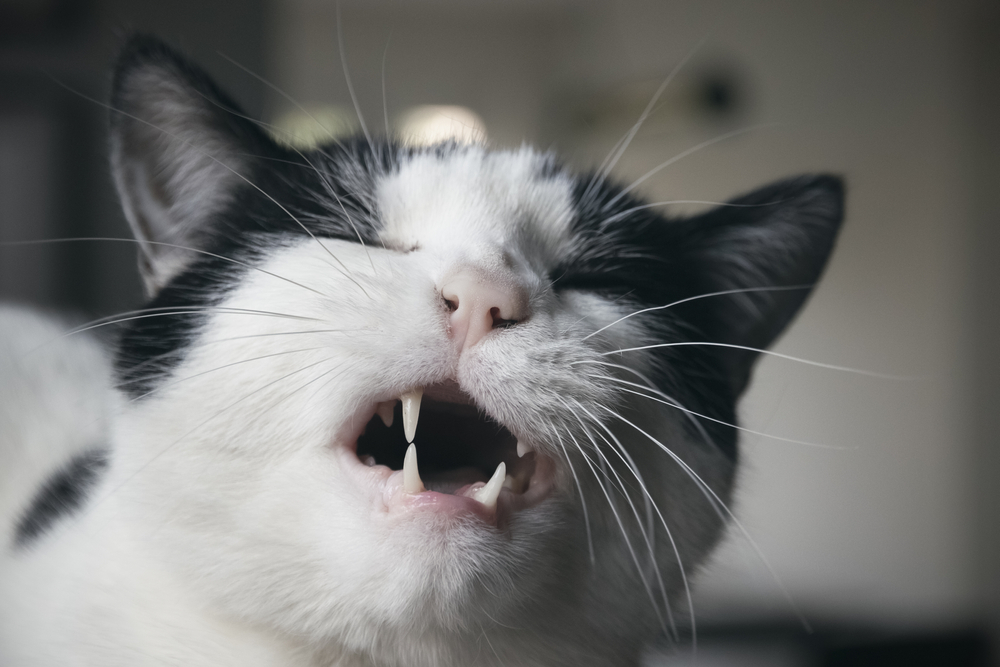
A cat who suddenly has a lot more to say is trying to communicate something, and the message ranges from an empty food bowl to real medical trouble like an overactive thyroid, high blood pressure, or pain. Plenty of cats are chatty by nature, and meowing for breakfast, attention, or an open door is perfectly normal. The time to worry is when the pattern changes: a quiet cat who starts howling, a senior cat crying at night, or a voice that suddenly sounds different. In older cats especially, new or louder vocalization is one of the earlier signs of illness, anxiety, or age-related confusion, and because cats hide discomfort so well, that change in volume is often the only clue you get.
Untangling a medical cause from a behavioral one is exactly what we do at State of the Heart Veterinary Care, and it starts with listening to your story as carefully as we examine your cat. A Denver veterinary visit for your cat gives us the chance to run in-house bloodwork, a urinalysis, and a blood pressure measurement, which screen for the most common medical culprits behind a suddenly talkative cat. If the results come back healthy, we help you sort out the behavioral side, from nighttime attention-seeking to anxiety, and build a plan that fits your home and your budget. If your cat’s communication has changed, reach out and we will help you figure out what they are trying to say.
What a Louder Meow Usually Means
- A sudden change in your cat’s meowing, especially a senior who gets loud or cries at night, is worth a closer look, because cats hide illness so well that a new voice is often the first clue you get.
- Medical causes like pain, an overactive thyroid, high blood pressure, fading senses, and age-related brain changes are common in older cats, and they’re the first things we rule out.
- Once health checks come back clear, stress, boredom, and learned begging are the usual behavioral culprits, and each one responds to a specific plan.
- Excessive meowing is usually solvable. It means your cat needs something, not that you’re stuck with the noise.
When Does a Cat’s Meowing Cross From Chatty to Concerning?
Most feline noise falls into normal chattiness, but a meow that turns insistent, frantic, or sounds different falls outside ordinary communication and deserves attention. Some cats narrate their whole day and always have, so what matters isn’t volume alone but change.
Breed plays a part, too: Siamese, Bengals, and other natural talkers tend to comment on everything, and that running commentary is usually just personality. The shifts that concern us often creep in slowly, a little more crying each week, until one night you realize your cat has been pacing and calling for an hour. Catching that drift early, before it hardens into a nightly habit, gives us the best shot at a simple answer.
| Usually normal | Worth a closer look |
| Meowing for breakfast, treats, or an open door | Crying at night despite a full bowl and a clean litter box |
| A lifelong chatty cat staying chatty | A formerly quiet cat who suddenly gets vocal |
| Greeting you at the door or during play | Distressed, yowling, or pained-sounding meows |
| Talking back when you talk to them | A voice that suddenly sounds different or hoarse |
What Does Normal Cat Communication Sound Like, and When Is It Too Much?
Cats say as much through body language and behavior as they do through sound, layering posture, tail position, and scent into a whole catalog of meows, chirps, purrs, and trills. Vocalizing only tips into “excessive” when it’s persistent, distressed, or clearly out of character for your cat.
A tail flick or a flattened ear often explains a meow that would otherwise seem to come from nowhere, which is why knowing your cat’s everyday sounds matters so much. The sounds that warrant a visit are the ones that break the pattern: a new nighttime yowl, a distressed or urgent tone, or crying during basic activities like using the litter box.
| Common cat sound | What it usually means |
| Short chirp or trill | A friendly hello |
| Repeated meows near you or the food bowl | “Feed me” or “notice me” |
| Low, drawn-out yowl | Tension, discomfort, or a turf dispute |
| Loud crying at night | Boredom in a young cat; often a medical or cognitive flag in a senior |
What Medical Problems Can Make a Cat Meow More?
Any cat whose meowing changes deserves an exam first, because several common medical problems, most of them more likely with age, turn up the volume. Sorting them out starts with a sick-pet exam that includes bloodwork, a urinalysis, and a blood pressure reading.
Could My Cat Be in Pain?
Pain is one of the most common reasons a cat’s voice changes, and it usually shows up around activity, eating, or being touched. At home, watch for hiding, a hunched posture, or a cat who stops grooming a tender spot.
- Arthritis makes once-easy movement ache, so an older cat may cry out mid-jump or complain while grooming stiff, sore joints.
- A cat straining and howling in the litter box may have a urethral obstruction, a blockage that becomes life-threatening within hours.
- Dental disease, ear infections, glaucoma, or even inflammatory bowel disease can cause pain that results in extra meowing.
When the exam points toward sore teeth, joints, or something deeper, digital X-rays let us see beneath the surface to find the cause.
Is Hyperthyroidism Making My Older Cat Cry?
Hyperthyroidism revs an older cat’s metabolism into overdrive, pairing weight loss and a bottomless appetite with the restlessness and around-the-clock crying that send many families searching for answers. Some households notice the voice itself starts to sound different. A simple panel of screening bloodwork usually catches it early, and the condition is very manageable once we find it.
Can High Blood Pressure Cause Restlessness and Night Crying?
Hypertension can leave a cat pacing and disoriented after dark, and in severe cases it detaches the retina and steals a cat’s sight almost overnight. High blood pressure rarely shows up alone; it often accompanies kidney disease or an overactive thyroid, which is why a blood pressure check belongs in any thorough senior workup. Losing vision suddenly is frightening, and that fear can make the crying louder still.
Does Fading Sight or Hearing Make Cats Louder?
As sight and hearing dim, a cat can feel lost, and calling out becomes a way to check that the world, and you, are still there. Age-related deafness often turns the volume up: a cat who can no longer hear their own voice loses the feedback that kept it soft. Vision trouble, from cloudy lenses to retinal changes, leaves a cat bumping into furniture and hesitating in dim rooms. Small home tweaks help a lot here: keep the furniture where it is, add a nightlight, and speak before you touch so a cat with failing senses feels secure rather than startled.
Is My Senior Cat Just Confused?
Aging changes how an older brain processes the world, and cognitive decline can unstitch familiar routines, leaving a senior cat wandering the hall and crying into an empty room at three in the morning. Other signs include forgetting where the litter box is, staring at walls, or seeming lost in a home they’ve known for years. Regular senior wellness visits, predictable daily rhythms, and easy-to-reach food, water, and litter can ease the anxiety and lift quality of life.
When Could Meowing Point to a Neurologic Problem?
In rare cases, relentless vocalizing travels with personality shifts, circling, or seizures that point toward brain tumors or other neurologic disease. A dramatic, out-of-nowhere change in behavior deserves a prompt exam. Our team starts with the basics, an exam and lab work, then coordinates advanced diagnostics and referral imaging when the picture points toward the brain.
What Behavioral and Environmental Causes Lead to Excessive Meowing?
When a full medical workup comes back clean, the answer usually lives in your cat’s world rather than their body. Cats are finely tuned to their surroundings, and boredom, stress, tension with another pet, or a simple learned habit can all add up to a lot of noise.
Could Stress or a Change at Home Be Setting Off the Meowing?
Cats are creatures of routine, and life stressors like a move, a new pet, or a shifted feeding schedule can tip a settled cat into anxious, repetitive meowing. In multi-cat homes, friction often hides behind the noise, and the fix is usually more resources spread farther apart or small home changes:
- Extra litter boxes: one for every cat, plus one extra
- Separate feeding spots: no cat should have to feel like they need to protect their meal
- Enough vertical perches: cats need space to escape and supervise their kingdom
- Pheromone diffusers: calming scents reduce stress levels
- Quiet retreats: hiding spots and undisturbed sleeping areas for everyone
- Predictable mealtime rhythm: knowing when and where their next meal occurs gives reassurance
When anxiety runs deeper, you can ask our behavior expert to help pin down the trigger and shape a plan, which may include anti-anxiety medication.
Is My Indoor Cat Bored or Asking to Go Outside?
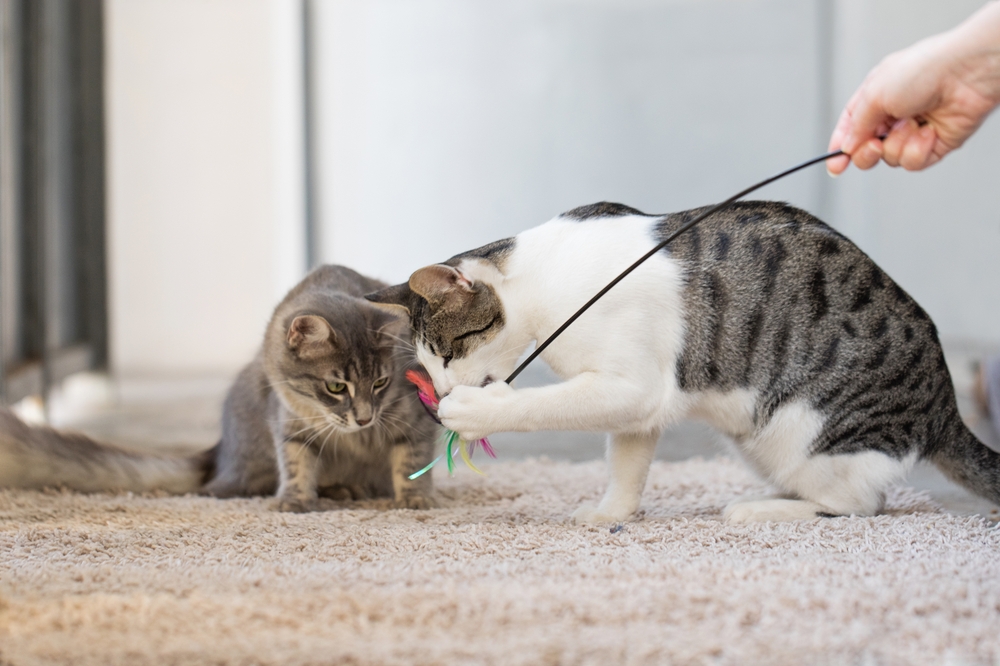
A bored indoor cat often meows simply for something to do, and enrichment toys that mimic the stalk-and-pounce of a hunt give that restless energy somewhere better to go. Life inside doesn’t switch off a hunter’s instincts, so daily interactive play, climbing shelves, and puzzle toys go a long way. Cats who’ve tasted the outdoors can be especially insistent, parking themselves at the door and yelling. Safe compromises, like a secure window perch, supervised leash walks, or an enclosed catio, satisfy that curiosity without the dangers of free roaming.
Why Does My Cat Cry for Food All the Time?
A cat’s body is built to hunt many small meals a day, so spacing meals out, and thinking through the choice between wet and dry food, can quiet a cat who’s learned to sing for supper. Cats are also superb trainers: feed a crying cat even once and you’ve taught them that noise works, so the calls grow louder and more insistent. Puzzle feeders, food-dispensing balls, slow bowls, and automatic timers turn eating into a small hunt and take the pressure off the human in charge of the can opener.
Can You Actually Get a Meowing Cat to Settle Down?
Most excessive meowing is genuinely solvable: it’s a symptom, not a life sentence, and once we understand what’s driving it, the noise usually eases. A complete exam and targeted testing tell us which kind of problem we’re solving, medical, behavioral, or a little of each.
Sometimes the fix is a thyroid medication and a calmer, better-fed senior cat. Sometimes it’s a second litter box and a nightly play session. A cat who’s started meowing more is almost always asking for help, not misbehaving, and that’s a puzzle we can solve together.
Frequently Asked Questions About Cat Meowing
Why does my cat meow so much at night?
Nighttime meowing has a few usual suspects. In younger cats it’s often boredom or attention-seeking, since the house goes still and you become the most interesting thing around. In seniors, it more often signals something medical or cognitive, from an overactive thyroid to age-related confusion. A late-evening play session and a small meal before bed help the attention-seekers, but a senior cat who suddenly cries after dark should be examined.
Should I ignore my cat when they meow for attention?
Once medical causes are off the table, ignoring attention-seeking meows can help, though timing is everything. Responding some of the time, especially with food or play, teaches your cat that persistence pays off. Decide what you’ll answer and what you won’t, then stay consistent while offering plenty of affection on your own terms. Never ignore a meow that sounds distressed or comes with straining, hiding, or other signs that something’s wrong.
When do cats usually start meowing more because of age?
There’s no hard cutoff, but the age-related conditions behind extra vocalizing tend to show up from around 10 to 12 years on. That’s also when more frequent checkups and screening tests matter most, because catching these shifts early keeps a senior cat comfortable. If your cat is in that range and getting louder, it’s worth a conversation.
Let’s Help Your Cat Say What They Mean
A change in your cat’s voice is worth listening to, and you don’t have to decode it alone. If your cat is straining and crying in the litter box or suddenly crying out, come in for same-day urgent care, because a possible urinary blockage or pain can’t wait for a routine appointment. For everything less urgent, from nighttime yowling to a senior who suddenly has a lot to say, get in touch with State of the Heart Veterinary Care here in Denver and we’ll help you figure out what your cat is trying to tell you.