Dental disease is one of the most common conditions in dogs and cats, and it is also one of the most preventable, at least in its early stages. The challenge is not knowing that dental care matters; it is finding a realistic, affordable approach to home maintenance that does not require expensive products or a 30-minute daily struggle with an unwilling cat. The good news is that the most effective home care tools are not necessarily the most expensive ones. What matters most is consistency and using the right product for your individual pet.
State of the Heart Veterinary Care in Denver was built on the belief that quality care should be accessible to everyone, and that extends to how we approach dental health. Our dental procedures are offered at tiered, affordable price points specifically so cost does not stand between your pet and a healthy mouth. We will help you build a practical home routine around your budget and your pet’s personality. Contact us to schedule a dental consultation.
Key Takeaways
- Daily or near-daily brushing is the most effective home care method because it physically disrupts bacterial biofilm before it can mineralize into tartar, but wipes, gels, water additives, dental diets, and chews all contribute when brushing is not realistic.
- Home care prevents new tartar from forming but cannot remove tartar that has already mineralized; professional dental cleaning under anesthesia is what addresses what home care cannot reach.
- Looking for the VOHC seal helps identify dental products that have demonstrated measurable plaque or tartar reduction in controlled studies.
- The most effective routine is the one that actually happens consistently, even if that means 3 to 4 times weekly with a combination of brushing, wipes, and supplemental products.
Why Does Dental Home Care Matter for Your Pet?
Periodontal disease begins with plaque, a soft layer of bacteria that forms on tooth surfaces every day. Within days, plaque mineralizes into hardened tartar that bonds firmly to the teeth. Tartar irritates gum tissue, triggering inflammation that progresses from early gingivitis to deeper periodontal infection involving bone loss, painful tooth root exposure, and eventually tooth loss.
The systemic implications of advanced periodontal disease extend beyond the mouth. Bacteria from chronic dental infection can enter the bloodstream and have been linked to changes in heart, kidney, and liver tissue over time. By middle age, most pets show some level of dental disease; by senior years, untreated disease can be producing real systemic effects.
Daily or near-daily home care disrupts plaque before it hardens, slowing this progression meaningfully between professional dental cleanings. Home care extends the value of professional cleaning, not replaces it. Both work together: home care maintains what cleaning accomplishes, and cleaning addresses what home care cannot reach.
Our wellness examinations include dental monitoring as a standard part of every visit so small problems are caught before they require significant intervention.
What Is the VOHC and How Does It Help You Choose Products?
The dental product market is crowded with claims. The Veterinary Oral Health Council (VOHC) is an independent organization that evaluates dental products against specific standards for plaque or tartar reduction. Products that demonstrate measurable effectiveness in controlled studies receive the VOHC-accepted products seal.
The seal is one of the more reliable shortcuts for identifying products that actually work. Not all good products carry the seal (some manufacturers do not pursue VOHC evaluation), but the seal is a strong positive indicator when present. When shopping for dental chews, water additives, diets, gels, wipes, or any oral care products, looking for the VOHC seal is a worthwhile filter. Ask our team about which VOHC-accepted products are most appropriate for your specific pet.
Why Is Brushing the Gold Standard for Pet Dental Care?
Toothbrushing is the most effective home care method available because it physically disrupts the bacterial biofilm before it has a chance to mineralize into tartar. Daily brushing provides the highest level of protection, every-other-day brushing still delivers real benefit, and consistency over perfection is the right mindset. No other home care method matches brushing for direct effectiveness.
Wipes, gels, and water additives are useful supplements, but they do not reach all surfaces or remove plaque as efficiently as a brush.
How Do You Get Started With Brushing?
The introduction is where most home brushing routines succeed or fail. Rushing the process creates negative associations that are very difficult to come back from. A patient, step-by-step approach works much better.
A sensible progression:
- Touch the muzzle and lift the lips with a reward after each brief session, for a few days
- Run a finger along the outer tooth surfaces and gumline so the sensation becomes familiar
- Introduce a small amount of pet-safe toothpaste on the fingertip
- Move to a finger brush or one of the soft-bristled pet toothbrushes, starting at the front teeth only
- Gradually extend further back over the following days or weeks
Cooperative care techniques are a great method, using consent and positive reinforcement throughout the process, and keeping sessions short enough to end before the pet becomes resistant.
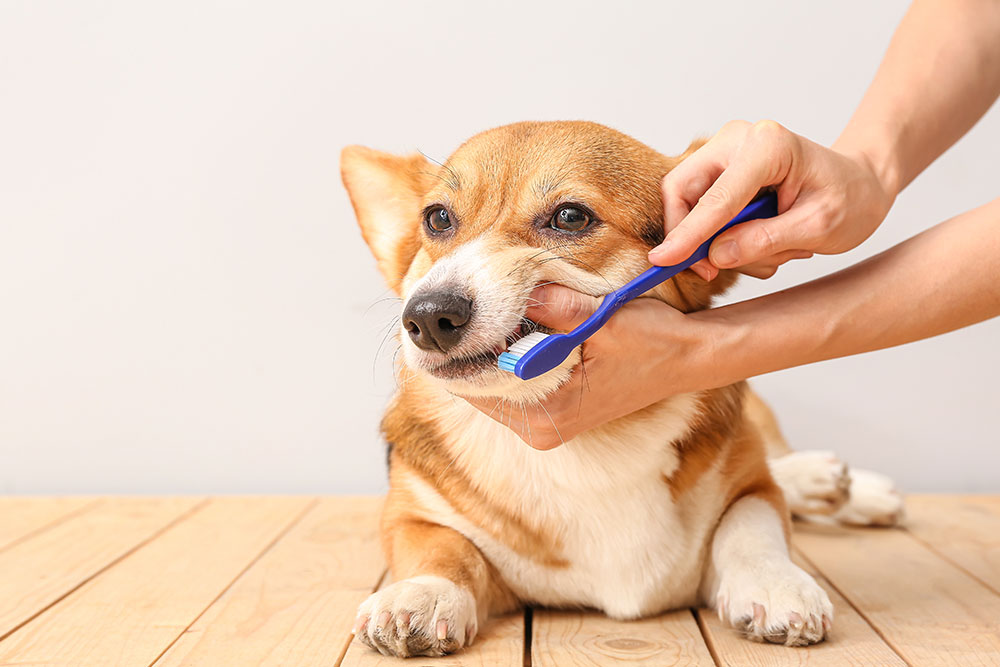
For brushing dog teeth, hold the brush at a 45-degree angle toward the gumline and use short circular or gentle back-and-forth strokes, focusing especially on the upper back teeth where tartar accumulates fastest. Working from the back of one side forward and repeating on the other side keeps the process systematic.
For brushing cat teeth, smaller brushes, lighter pressure, and shorter sessions distributed through the day tend to work better than one extended attempt. Cats are often more tolerant in positions where they feel stable rather than restrained.
Critical safety note: never use human toothpaste. Fluoride and xylitol are both toxic to pets. Use only enzymatic or pet-formulated products.
Common mistakes that create negative associations:
- Forcing the mouth open against resistance
- Brushing too long during early sessions
- Continuing after your pet has clearly indicated they are done
Better to end on a positive note and try again later than to push through resistance. If you are struggling with technique, our team can demonstrate proper brushing during a wellness visit.
Are Dental Wipes a Good Alternative to Brushing?
Some pets simply will not tolerate a toothbrush, and that is where alternatives matter. Dental wipes or gauze wrapped around a finger provide friction-based plaque removal that is significantly better than no home care. The wipe or gauze rubs along the outer tooth surfaces and gumline, mechanically removing surface plaque using a technique similar to brushing but with less precision and reach.
Where wipes work well:
- Front teeth (incisors and canines)
- Outer surfaces of the cheek teeth
- Gumline along these accessible surfaces
Where wipes are limited:
- Inside surfaces of teeth (toward the tongue)
- Back molars
- Below the gumline
Wipes are particularly useful for cats who often refuse brushes more readily than dogs, and for anxious pets where a brush feels too aggressive. They can be a stepping stone toward eventual brushing or a long-term solution. When wipes alone are insufficient, professional cleaning addresses what home care cannot reach. The frequency of professional cleaning often increases when home care is limited to wipes rather than brushing, but that is a reasonable tradeoff for pets who genuinely will not tolerate brushing.
How Do Dental Gels, Powders, and Sprays Work?
Enzymatic gels, powders, sprays, and pastes work chemically by breaking down bacterial biofilm without requiring scrubbing. The key ingredients are typically lactoperoxidase or glucose oxidase enzyme systems that target the proteins in dental biofilm, and they are useful when scrubbing-based approaches are not realistic for your pet.
Application methods vary by product:
- Dental powders sprinkled directly on food
- Dental sprays directed at the teeth and gums
- Gels and pastes applied with a finger to the gumline
Many require no rinsing and continue working between applications. They provide a meaningful layer of protection even for pets who only tolerate minimal contact, and they enhance the effectiveness of any brushing that does occur. Realistic expectations matter: enzymatic products support oral health but work best as part of a broader routine that includes some mechanical plaque removal. The combination approach works well: brush or wipe when possible, supplement with enzymatic products on days when full home care is not realistic.
Do Dental Water Additives Actually Work?
Water additives deliver antimicrobial or enzymatic ingredients passively through drinking, and they are the most hands-off option available for pets who resist anything applied directly to their mouths. Effectiveness varies considerably by product. Some have published research demonstrating measurable plaque reduction. Others have weaker evidence behind their claims, which makes choosing wisely important.
Practical considerations:
- Some pets refuse to drink water with additives, particularly cats with strong taste preferences
- Introduce additives gradually at lower concentrations to ensure your pet keeps drinking normally
- Replace water more frequently when additives are used to prevent flavor changes
- Offer multiple water sources so your pet can choose plain water if they prefer
Water additives cannot remove tartar that has already formed and should not be relied on as a sole strategy. They are useful adjuncts to mechanical cleaning, particularly for households where time or pet cooperation is limited.
Do Dental Diets Help Keep My Pet’s Teeth Clean?
Dental diets are formulated with both ingredients and kibble structure that support dental health. The kibble shape is designed so teeth penetrate further into the food before it crumbles, producing mild abrasive cleaning with each bite. Some formulations include ingredients that bind calcium and reduce tartar mineralization. One key requirement: your pet must actually chew for these diets to work. If they’re more of a “scarf it down without chewing” kind of pet, dental diets aren’t worth it.
Dental diets help extend the time between professional cleanings, but they are not a replacement. They work best for pets eating predominantly dry food. Our pharmacy carries veterinary dental diet options for dogs and cats with different nutritional and dental needs.
Which Dental Chews and Toys Are Safe for My Pet?
Chewing action physically scrapes plaque from tooth surfaces, and the right chew can meaningfully contribute to home care when selected carefully. The critical safety rule: if pressing your thumbnail into the chew does not leave a dent, it is too hard and risks fracturing teeth. Dangerous chew items include antlers, hooves, hard nylon products, and raw bones.
Safe chew toys flex or compress under pressure. Well-designed dental chew toys with textured surfaces that reach between teeth contribute genuine plaque removal when used regularly, especially if coated in an enzymatic toothpaste. Edible dog dental chews provide both mechanical removal of plaque and enzymatic action. Looking for the VOHC seal helps identify products with proven efficacy.
Practical tips:
- Match chew size to the dog (small chews are choking hazards for big dogs; oversized chews are too many calories for small dogs)
- Always supervise initial sessions with any new product
- Monitor for gastrointestinal upset if your pet is prone to sensitive digestion
- Watch for cracked or broken teeth, particularly with harder chew options
For cats, dental chews and treats can support oral health, though cats are generally less enthusiastic about chewing than dogs. Cat dental treats designed for the size and chewing pattern of cats are more effective than dog products scaled down.
What Can Home Dental Care Not Replace?
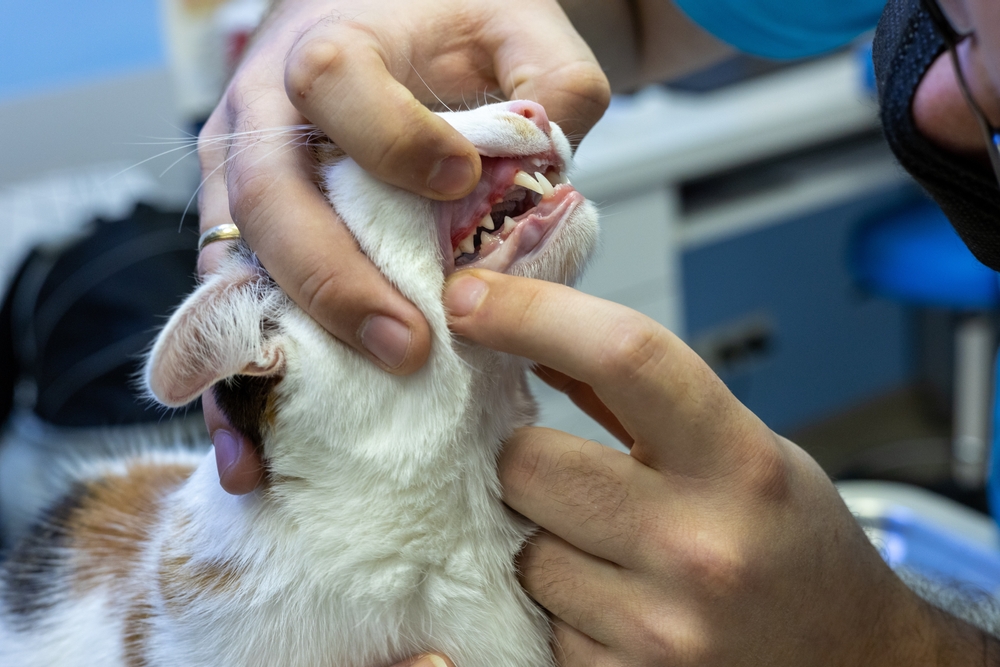
Even the most diligent home care cannot remove hardened tartar that has already formed on teeth. If you see a non-VOHC dental product showing before and after photos that are dramatic, it’s probably a marketing ploy. Mechanical scaling under anesthesia is the only way to remove established tartar. Home care prevents new tartar formation but does not reverse what is already there. Subgingival disease (infection and bone loss below the gumline) is similarly inaccessible to home care. Professional cleaning under anesthesia allows access to the entire tooth surface, including below the gumline, and dental radiographs reveal what is happening at the root level.
Anesthesia-free dental risks are worth understanding. Procedures done without anesthesia can only address visible surfaces and provide no access to subgingival areas or the diagnostic imaging that reveals root and bone pathology. They create the appearance of cleaner teeth while leaving the most clinically significant disease untouched. Proper anesthesia, with full monitoring and pre-anesthetic bloodwork, allows the team to do the work that actually matters.
A typical professional dental cleaning includes:
- Pre-anesthetic physical examination
- Individualized anesthetic protocols
- Perioperative pain management
- Ultrasonic scaling above and below the gumline
- Polishing to smooth the tooth surface
- Dental radiographs to assess root structure
- Extractions or other treatment as needed
- Close monitoring throughout recovery
How often professional cleanings are recommended varies by pet. Some need annual cleanings; some need them every 6 months; some can go 2 to 3 years between cleanings. Factors include breed (small breeds and brachycephalic breeds often need more frequent cleanings), home care consistency, individual oral chemistry, and existing dental disease severity. Our dental procedures follow a tiered pricing structure based on disease severity, helping you plan based on your pet’s actual needs.
How Do You Build a Sustainable Dental Routine?
The most effective dental routine is the one that actually happens. Pairing dental care with an existing daily habit (the last thing before bed, immediately after the evening meal, during the morning treat routine) dramatically improves consistency.
Strategies that work:
- Keep supplies somewhere visible so they are easy to reach
- Involve all household members so the routine holds even when schedules vary
- Set realistic goals (3 to 4 times weekly is far better than failing daily)
- Track progress informally through breath quality and gum color
- Combine products by brushing most days, wiping on hectic days, and adding dental chews and water additives as supplements
Common challenges and solutions:
- If your pet resists a toothbrush: back up to a finger brush or wipes and rebuild tolerance gradually
- If time is genuinely limited: even 30 seconds of enzymatic gel applied to the gumline daily produces benefit
- If your pet’s mouth is already painful: partial home care is not useful until professional treatment addresses the underlying disease
- If progress is not visible after consistent effort: your pet may need professional cleaning to reset baseline
Frequently Asked Questions About Pet Dental Home Care
How often should I brush my pet’s teeth?
Daily is ideal. Every other day still provides meaningful benefit. Three to four times weekly is significantly better than nothing.
My pet hates brushing. What now?
Try a softer approach: finger brushes, dental wipes, enzymatic gels applied to the gumline, dental chews. Some pets never tolerate brushing well, and that is manageable with a combination of alternatives plus more frequent professional cleanings.
Are dental chews enough?
For most pets, no. Dental chews are useful supplements but generally do not replace the value of brushing or wiping. They’re better than nothing, though.
How do I know if my pet’s home care is working?
Watch for breath quality, gum color (pink rather than red), visible tartar accumulation, and findings at routine veterinary exams. Stable or improved findings between visits suggest home care is contributing.
My dog’s breath is suddenly worse. Should I be worried?
Maybe. Worsening breath despite consistent home care often signals progressing dental disease that needs professional evaluation. Schedule an exam to identify what is driving the change.
Building Lifelong Dental Health for Your Denver Pet
Effective home dental care combined with regular professional cleanings is one of the highest-impact things you can do for your pet’s long-term health. Consistent home care, even imperfect home care, dramatically improves long-term dental outcomes. Our pharmacy carries a full range of vet-trusted dog dental products and cat dental products at affordable price points, and our team at State of the Heart Veterinary Care is happy to coach you through product selection and finding the approach that fits your pet’s personality and your lifestyle. Contact us to schedule a dental consultation.