When to Clean Your Dog’s Ears (and When to Stop and Call Your Vet)
If you’ve ever peered into your dog’s ear and thought, “That looks… suspicious,” you’re not alone. Ear cleaning is one of those tasks that sounds simple enough until you’re holding a cotton ball, your dog is giving you a look of profound betrayal, and you’re not entirely sure if what you’re seeing is normal or a reason to panic. The truth is, dog ears are surprisingly complex little ecosystems, and knowing when to clean them, how to do it safely, and when to step back and call for backup can make a real difference in your dog’s comfort and long-term ear health.
At State of the Heart Veterinary Care, we work with Denver pet owners every day on exactly these kinds of questions, and we’re always happy to walk you through what’s normal for your individual dog. Some breeds need their ears cleaned regularly; others are better left alone. Getting that guidance personalized to your dog is part of what our wellness examinations are all about. If you’re ever unsure what you’re seeing or smelling, don’t guess. Reach out to us and we’ll help you figure out the next step.
Why a Weekly Ear Check Is Worth 30 Seconds of Your Time
Most ear problems don’t start with a dramatic head shake or a foul smell. They start quietly, with a little extra wax, a faint change in color, or a scratch that happens a few more times than usual. That’s why getting into the habit of peeking inside your dog’s ears once a week catches problems before they become painful, expensive, or chronic.
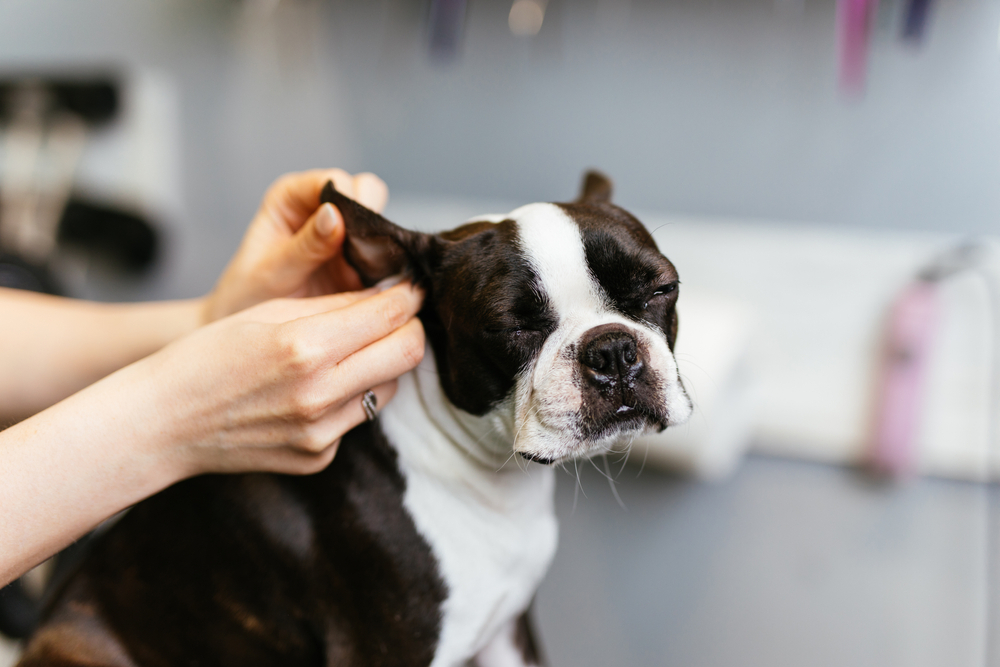
The good news is that ear checks are low-stress and easy to fold into whatever routine already exists. A quick look inside each ear takes seconds. Use treats, keep it positive, and start young if you can. Puppies who learn that ear handling is no big deal grow into dogs who tolerate it without a wrestling match. Cooperative care techniques make this even easier by teaching your pet to participate willingly in their own care.
These at-home checks are a perfect complement to what we assess during wellness visits, where our team does a thorough ear evaluation and can show you exactly what healthy ears should look and smell like for your specific dog.
What’s Going On Inside Your Dog’s Ear (and Why It Matters)
Dog ears are built differently than ours. Where human ear canals run in a fairly straight line, a dog’s ear canal makes an L-shaped turn, dropping vertically before angling horizontally toward the eardrum. This design traps moisture and debris in ways that a straight canal wouldn’t, and it creates a warm, dark, humid environment where bacteria and yeast are more than happy to set up shop.
Some breeds are especially prone to ear problems because of their anatomy. Dogs with heavy, floppy ears like Basset Hounds and Cocker Spaniels trap even more moisture and reduce airflow to the canal. Breeds with narrow or hair-filled ear canals, like Poodles and Schnauzers, face similar challenges. And dogs with allergies often develop ear inflammation as one of their first and most persistent symptoms.
Cats have ear issues too, though they’re generally less common. Ear mites are more frequently seen in kittens and outdoor cats, and allergic ear disease shows up in cats just as it does in dogs.
Knowing your pet’s anatomy and risk factors helps us build a care plan that actually fits. That’s something we tailor during your pet’s exams at our practice.
Signs That Something Is Off With Your Pet’s Ears
Healthy ears are pale pink, odor-free, and have minimal wax. When something changes, your pet will usually tell you before you even look, through scratching, head shaking, or rubbing their ear against furniture.
Here’s what to watch for:
- Head shaking or tilting that’s new, frequent, or persistent
- Scratching at one or both ears more than usual
- Redness or swelling visible at the ear opening
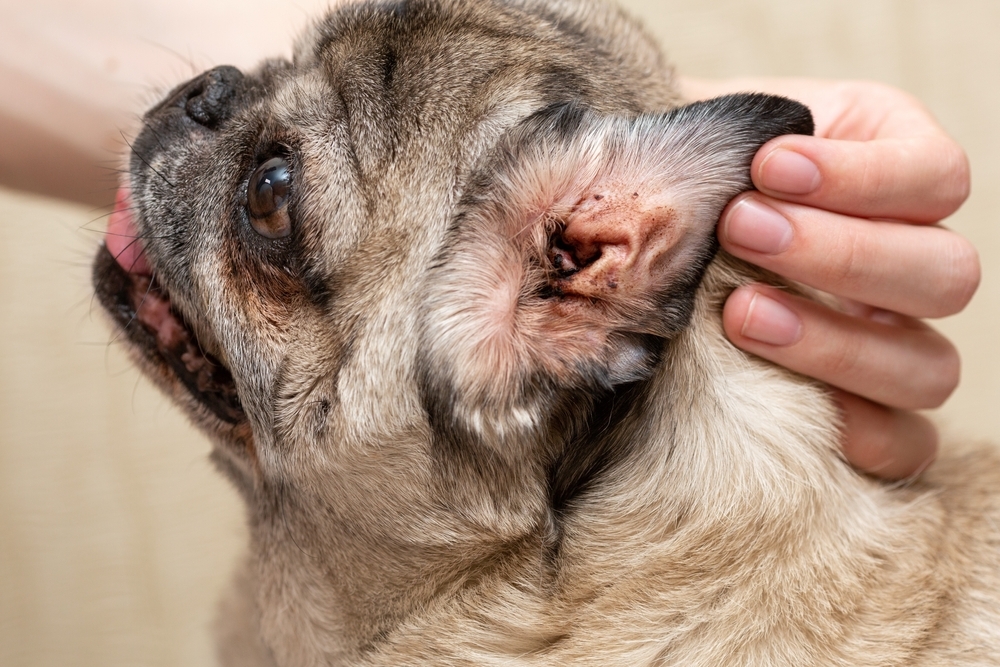
- Discharge that’s dark brown, yellow, or looks like coffee grounds
- Odor coming from the ear, especially a yeasty or sour smell
- Sensitivity to touch when you try to look inside or handle the ear flap
- Crusting or scabs around the ear canal entrance
Mild changes caught early are often simple to treat. When symptoms are more pronounced, like significant swelling, pain, head tilt, or bloody discharge, that’s the time to schedule a same-day visit rather than attempting home care. Waiting can allow a straightforward ear infection to become a deeper, more complicated one.
How Often Should You Actually Clean Your Dog’s Ears?
This is the question everyone asks, and the honest answer is: it depends entirely on your dog. There’s no one-size-fits-all schedule. All dogs benefit from a weekly visual inspection. Just flip the ear flap, take a look, give it a sniff. If everything looks and smells normal, you’re done. No cleaning needed.
For dogs who do need regular cleaning, every two to four weeks is a common range, but some dogs need it weekly and others almost never. The factors that affect frequency include:
- Breed and ear shape: Floppy-eared and hair-filled-canal breeds generally need more attention
- Allergies: Dogs with skin allergies often produce more ear wax and are prone to recurring infections
- Water exposure: Dogs who swim, play in lakes, or love bath time need their ears dried and sometimes cleaned afterward
- Infection history: Dogs with past ear infections may need a maintenance cleaning schedule to prevent recurrence
Living in Denver, our dry climate is actually a benefit for ear health compared to more humid regions, but summer activities at Chatfield Reservoir or Cherry Creek State Park can change that equation quickly. After any water exposure, drying your dog’s ears thoroughly is one of the simplest things you can do to prevent problems. Check for grass awns, also called foxtails. These little barbed grass seeds get trapped in ears and wiggle their way into the ear canal, causing pain and infection often requiring sedation to remove.
Cats generally need their ears cleaned less often, but the same principle applies: gentle inspection is always appropriate, and cleaning should only happen when there’s actually something to clean.
Our team can help you build a schedule that’s specific to your pet’s anatomy, lifestyle, and history. Give us a call and we’ll get it sorted.
When NOT to Clean Your Pet’s Ears at Home
This section might be the most important one here. There are situations where cleaning at home can make things significantly worse, and knowing when to stop is just as valuable as knowing how to start.
Do not clean your pet’s ears at home if you notice any of the following:
- Signs of active infection: redness, swelling, warmth, or discharge with a strong odor
- Pain or extreme sensitivity: your pet flinches, cries, or pulls away when the ear is touched
- Bleeding or crusting inside the ear canal
- Head tilt or loss of balance: this can indicate a middle or inner ear problem, or ruptured ear drum
Otitis externa, which is an infection of the outer ear canal, is the most common type and the one most owners encounter first- but infections can progress inward. Otitis media and interna affect the middle and inner ear and are far more serious, potentially affecting hearing and balance permanently. Putting an over-the-counter ear cleaner in an ear with a ruptured ear drum can cause permanent damage.
If something looks inflamed, painful, or just wrong, the right move is to schedule an exam at State of the Heart before putting anything in the ear. When we know what we’re dealing with, we can recommend the right treatment and tell you exactly when not to clean at home.
How to Clean Your Dog’s Ears Safely (Step by Step)
Once your vet has confirmed that cleaning is appropriate and there’s no active infection or eardrum concern, here’s how to do it without making your dog regret trusting you:
- Gather your supplies. You’ll need a veterinary-approved ear cleaner, cotton balls or gauze pads, and treats. Never use cotton swabs inside the ear canal, but you can use them to get into the nooks and crannies of the ear flap.
- Get comfortable. Sit with your dog in a calm, quiet spot. For wiggly dogs, having a second person help can make a big difference. We recommend bathrooms or outdoors- this can get a little messy.
- Lift the ear flap and squeeze enough cleaner into the canal to fill it. Be generous.
- Massage the base of the ear gently for about 20 to 30 seconds. You’ll hear a satisfying squelching sound. That’s normal. This works the solution down into the L-shaped canal and loosens debris.
- Let your dog shake. Step back (seriously, step back) and let them shake their head. This brings loosened debris up and out.
- Wipe away what you can see with a cotton ball or pad. Only clean what’s visible. Never push anything into the canal.
- Reward generously. Treats, praise, toys- whatever your dog loves. You want this to be a positive experience so next time isn’t a battle.
If you’re unsure about technique, we’re happy to walk you through it during any wellness visit. A quick hands-on demonstration is worth a thousand YouTube videos.
Why Does the Ear Cleaner You Choose Actually Matter?
Not all ear cleaners are created equal, and some that look perfectly reasonable on a pet store shelf can actually cause harm.
The Problem With Over-the-Counter Cleaners
Some retail ear cleaning products contain harsh ingredients that sting inflamed tissue or disrupt the ear’s natural environment. Products marketed as “natural” aren’t automatically safe either. Essential oils like tea tree oil are toxic to pets, and alcohol-based solutions can cause burning and dryness. Human ear products should never be used on pets. Don’t use apple cider vinegar, coconut oil, or hydrogen peroxide. The pH, formulation, and concentration are all wrong and can cause significant damage, especially if the ear is already inflamed or has a ruptured ear drum.
Skip over-the-counter “ear mite remedies” entirely. They often cause more inflammation. If you’re seeing dark gunk in your dog’s ears, it’s extremely unlikely that it’s ear mites. We have far more effective treatments for ear mites, for dogs and cats both.
What to Look for in a Safe Ear Cleaner
Veterinary-approved ear cleaners are pH-balanced for animal ears and contain gentle surfactants that lift debris without damaging tissue. Some include drying agents, which are helpful for dogs prone to moisture-related infections. Others are formulated specifically for bacterial versus yeast issues, and which type your pet needs depends on what ear cytology shows is growing in there.
We carry several options in our pharmacy that we trust and recommend:
- EpiOtic Advanced is a gentle, non-irritating cleanser great for routine maintenance
- EpiKlean is designed for ears that need a deeper clean
- KlearOtic works well for sensitive ears
- Ear Wipes are a convenient option for quick maintenance between deeper cleanings
The right product depends on your pet’s specific situation. Ask our team what they’d recommend for your dog.
Water, Swimming, and Keeping Ears Dry in Colorado
Moisture trapped in the ear canal is one of the top risk factors for infection. Even clean water from a bath or a mountain lake creates the warm, wet conditions bacteria and yeast love.
If your dog is a swimmer or just enjoys splashing through puddles on a Denver trail, post-water ear care should become automatic:
- Dry the ear flap and visible canal entrance with a soft towel or cotton ball immediately after water exposure
- Use a veterinary drying solution if your vet recommends one, especially for dogs with a history of ear infections
- Avoid Q-tips or anything that goes deep into the canal. Just dry what you can see and reach
- Schedule cleanings more frequently during the summer months if your dog is in the water regularly
- Flop those ears back when your dog is napping to expose the underside of the ear to the open air
- Trim hair around the ears or ear canal. Plucking isn’t recommended- it can actually cause more inflammation.
Colorado’s dry air helps us most of the year, but between reservoir outings, mountain creek romps, and the occasional rainy stretch, keeping an eye on your dog’s ears after water exposure is worth the small effort.
What Do Professional Ear Exams Catch That You Can’t?
Even the most diligent at-home inspector can only see so far into a pet’s ear. The L-shaped canal means the majority of the ear, including the eardrum, is invisible without an otoscope.
During a professional ear exam, we can:
- Visualize the entire ear canal and eardrum using an otoscope, catching problems you’d never see at home
- Take cytology samples to identify whether bacteria, yeast, or mites are present, which determines the right treatment
- Detect early changes before they become full-blown infections
- Establish a baseline for your pet’s ears so future changes are easier to spot
- Identify underlying causes like allergies, foreign bodies like foxtails and ticks, or polyps that drive recurring ear problems
Our advanced diagnostic capabilities allow us to get detailed answers when ear problems are persistent or complex. For pets with chronic ear issues, we can work through the underlying cause rather than just treating symptoms on repeat.
This is one of the many reasons regular wellness examinations matter, even when your pet seems perfectly fine. Prevention is always easier (and cheaper) than treatment.
Frequently Asked Questions About Cleaning Your Pet’s Ears
My dog’s ears smell fine but look a little waxy. Should I clean them?
A small amount of light brown wax is completely normal and actually serves a protective function. If there’s no odor, no redness, and your dog isn’t scratching, a light wax buildup alone isn’t necessarily a reason to clean. If there is enough wax that you can scoop out a finger-full, that’s too much. When in doubt, reach out to us and we can help you decide.
How do I know if my dog has an ear infection or just dirty ears?
“Dirty” ears are usually just a little waxy and have little to no odor. An ear infection typically comes with a stronger smell, redness, discharge that’s dark brown or yellowish, and a dog who’s actively scratching or shaking their head. If you’re seeing more than mild wax, schedule an exam before cleaning.
My dog hates having their ears touched. What do I do?
Start slow and keep sessions short. Let your dog sniff the cleaner, touch the ear flap briefly, then reward. Build up gradually over days or weeks rather than pushing through resistance. Dogs who’ve had painful ear infections in the past are often especially sensitive, and that association takes time to change. If handling the ears is consistently difficult, mention it at your next wellness visit and we can help troubleshoot.
Keeping Your Dog’s Ears Healthy for the Long Haul
Ear care doesn’t have to be complicated. A weekly peek, the right cleaner when needed, smart post-water habits, and regular vet checkups cover most of it. The pets who end up with chronic ear problems are usually the ones where a small issue went unnoticed for too long, or where the underlying cause, like allergies or anatomy, was never properly addressed.
At State of the Heart Veterinary Care in Denver, we take ear health seriously because we’ve seen how much it affects quality of life. A dog with a painful ear infection is miserable, and a dog with a chronic, untreated ear problem is even worse off. We’d much rather help you prevent it, and if something does come up, we have the diagnostic tools and services to figure out what’s going on and fix it properly. Contact us to schedule an ear check or to talk through any concerns about your pet’s ear health.