How Do You Know When It Is Time? A Compassionate Guide to Euthanasia, Palliative Care, and Senior Pet Support
One of the hardest questions a pet owner will ever face is “how do I know when it is time?” There is no single answer, and anyone who tells you otherwise is oversimplifying one of the most personal decisions you will ever make. What we can tell you is that there are tools, frameworks, and honest conversations that can help you evaluate your pet’s quality of life so you can make a decision rooted in love rather than guilt or fear. Whether your pet is aging gracefully or managing a serious illness, understanding your options, from palliative care to humane euthanasia, gives you the ability to act in their best interest when it matters most.
At State of the Heart Veterinary Care, we walk with families through this entire process, from the first quality-of-life conversation to the final goodbye and everything in between. Our team provides compassionate senior care in Denver and will always be honest with you about where your pet is in their journey. You are not alone in this. Call us at (720) 543-2320 or contact us whenever you are ready to talk.
What Is Palliative Care, and When Does It Begin?
Palliative care is the active management of your pet’s comfort, pain, and quality of life when the goal has shifted from curing a disease to living as well as possible with it. It begins not at the very end, but the moment a diagnosis is made that cannot be fully reversed- cancer, chronic kidney disease, congestive heart failure, severe arthritis, cognitive dysfunction. Palliative care and curative treatment are not opposites; they can run alongside each other, and palliative care does not mean giving up.
What it does mean is that quality of life becomes the primary measure of success. Every medical decision is weighed against whether it helps your pet feel better, move more comfortably, and stay engaged with their life. Palliative care may involve pain medications, anti-nausea drugs, appetite stimulants, mobility aids, dietary changes, and environmental adjustments. It also involves honest, ongoing conversations between you and our team about where your pet is in their journey and where they are heading.
Starting those conversations early, before a crisis, is one of the most valuable things you can do for your pet and for yourself.
Knowing the Disease: Why the End-Stage Matters
One thing families find deeply helpful- and that is not always discussed proactively- is understanding what the end-stage of their pet’s specific disease actually looks like. Not every disease ends the same way, and knowing what to expect makes it possible to choose a peaceful, well-timed goodbye rather than waiting until a crisis forces your hand.
A dog with congestive heart failure will eventually reach a point where medications can no longer keep fluid from accumulating in the lungs, and breathing becomes labored and distressing. A cat with chronic kidney disease typically enters a phase of profound nausea, weakness, and loss of interest in everything around them. A dog with cancer affecting the spleen may be comfortable one day and in acute collapse the next, with little warning. A pet with severe arthritis or neurological disease may reach a point where they can no longer stand, maintain hygiene, or move without significant pain.
Knowing what your pet’s disease typically does in its final stage allows you to make the decision to euthanize while your pet still has some comfort and dignity remaining, rather than in the aftermath of a frightening deterioration. This is not rushing the end. It is refusing to let suffering be the final chapter. We encourage every family managing a serious diagnosis to ask us directly: what will this look like at the end, and what signs should I watch for? That conversation is one of the most important ones we can have together. Schedule an exam at State of the Heart and we’ll go through every step with you.
How Do You Evaluate Your Pet’s Quality of Life?
The HHHHHMM Quality of Life Scale
The HHHHHMM quality of life scale was developed as a structured framework for evaluating a pet’s daily experience across seven dimensions. It is one of the most widely used tools in hospice and palliative veterinary care, and it gives families a consistent way to track changes over time rather than relying on memory or gut feeling in isolated moments.
The seven dimensions assessed are:
- Hurt: Is pain being managed adequately? Is breathing comfortable?
- Hunger: Is your pet eating enough to sustain themselves?
- Hydration: Are they adequately hydrated?
- Hygiene: Can they be kept clean and free of sores?
- Happiness: Do they still show interest in life, people, or activities they previously enjoyed?
- Mobility: Can they move enough to satisfy basic needs without significant distress?
- More good days than bad: Over the past week or two, have the comfortable days outweighed the hard ones?
Each dimension is scored from 1 to 10. A total score above 35 generally suggests an acceptable quality of life; scores consistently below that threshold suggest it may be time to consider euthanasia. The numbers are a tool, not a verdict, and a single low score should be understood in context. What matters most is the trend over time.
Daily Observations That Matter
Beyond any formal scale, there are daily observations worth tracking:
- Can your pet stand and walk without help, or are they struggling to rise?
- Are they still interested in food, water, and favorite treats?
- Do they respond to family members and show interest in their surroundings?
- Are there signs of discomfort- labored breathing, vocalizing when touched, guarding certain areas?
- Can they groom themselves or maintain basic hygiene?
- Over the past two weeks, have the comfortable days outnumbered the difficult ones?
Keeping a simple written log, even just a few words each day, makes trends visible in a way that memory alone cannot. It also helps when you bring those observations to us and we work through the picture together.
Involving the Whole Family
Quality of life evaluation should not fall on one person’s shoulders. When families approach this as a shared process, the decision, when it comes, tends to feel clearer and more at peace, because everyone has been watching, contributing, and reaching the same conclusions together.
Different family members may notice different things. A child who plays with the dog every afternoon may notice first that the dog no longer comes to greet them. A partner who feeds the cat in the morning may notice a change in appetite before anyone else does. An adult who lives alone with their pet may find it helpful to loop in a trusted friend or a veterinary team member to serve as a second set of eyes.
If family members disagree about where a pet is in their journey, bring that to us. Part of our role is to give you a clinical picture that is clear and honest so that disagreements can be resolved not through argument but through shared understanding of what is actually happening medically. We are happy to have those conversations with multiple family members present.
How Do You Know When It’s Time To Euthanize Your Pet?
What Humane Euthanasia Involves
Euthanasia is a medical procedure performed with sedation and a euthanasia agent that causes the heart to stop gently and quickly. It’s essentially an overdose of anesthesia. Most pets are given a sedative first so they are relaxed and often asleep before the final injection is administered.
You are welcome to stay with your pet for all or part of the process, or to step out if that is what you need. There is no correct way to be present. Our team will follow your lead, take as much time as you need, and make sure your pet is calm and comfortable throughout.
The Case for Choosing Before the Crisis
Many families describe the hardest part of euthanasia not as the decision itself, but as the fear of having waited too long. A pet who has spent their final days in significant pain or distress, or who died in an acute emergency, leaves behind a particular kind of grief. A family who was able to schedule a calm, planned appointment- in a quiet room or at home, with time to say goodbye- often describes a completely different experience.
Choosing euthanasia while your pet still has some quality of life remaining, before the final stage of their disease fully takes hold, is not making the decision too soon. It is making it in time. When the hard days begin to outweigh the good ones, when your pet has lost the things that made life worth living for them, when the disease is progressing toward a difficult end- that is the window when a peaceful, chosen goodbye is possible. A few weeks later, that window may have closed.
Talk to us before you feel certain you are there. These conversations do not require a crisis to start.
Indicators That Help Clarify the Picture
There is no checklist with a passing score, but these are the kinds of observations that tend to shift the picture:
- Pain that does not respond adequately to available medications
- Labored or distressed breathing at rest
- Inability to eat, drink, or move without significant suffering
- Loss of interest in all activities that previously brought joy
- More hard days than comfortable ones, with no expectation of meaningful improvement
- A pet who seems to have withdrawn from life entirely
If you are seeing these signs consistently, schedule a quality-of-life consultation with us. Contact us at any point- these conversations do not need to wait until a crisis.
Aftercare: Decisions Worth Making Before the Day
One of the kindest things you can do for yourself is to make aftercare decisions before the appointment rather than immediately after it. In the hours and days following euthanasia, grief is acute, and being asked to make logistical choices in that state adds unnecessary weight to an already heavy time.
Cremation
Cremation is the most common choice for pet aftercare in the Denver area. There are two primary options:
Private cremation means your pet is cremated individually, and the ashes returned are your pet’s alone. Families who want to keep, scatter, or memorialize their pet’s ashes typically choose this option. The ashes are typically returned in a container within a week or two, and many families choose to transfer them to an urn, a memorial garden stone, or another form of permanent remembrance.
Communal cremation means your pet is cremated with other animals, and individual ashes are not returned. This is a dignified, lower-cost option for families who do not wish to receive ashes. There is no less care or respect involved in this choice.
Burial
Home burial in Denver city limits is generally not permitted under municipal regulations. Pet cemeteries exist as a licensed option for in-ground burial and provide a dedicated, maintained space for interment with markers and ongoing access for family visits. For families on rural properties outside city limits, home burial may be legally permissible, though local regulations vary by county and depth requirements apply.
If burial is important to your family, it is worth clarifying your specific address’s options ahead of time so you are not navigating that research in the middle of grief.
Making the Decision Ahead of Time
At your quality-of-life consultation or at any visit before the final appointment, let us know what you are thinking about for aftercare. We can answer questions, explain the options available through our clinic, and note your preferences so that on the day of the appointment, those decisions are already made. All that is left is to be present for your pet.
How Do I Keep My Senior Pet Comfortable At Home?
Pain Management and Comfort Measures
A good palliative care plan combines medical pain management with practical environmental support tailored to your pet’s specific condition.
Medical options your veterinarian may discuss:
- Anti-inflammatory medications matched to your pet’s condition and organ function
- Gabapentin and other neuropathic pain medications for nerve-related discomfort
- Injectable options for pets who cannot take oral medications reliably
- Appetite stimulants when reduced eating is affecting quality of life
Assistive tools that ease daily life:
Assistive devices for dogs with arthritis include mobility harnesses for help rising and navigating stairs, toe grips to prevent slipping on hard floors, and booties for traction. Creating an arthritis-friendly home involves non-slip rugs on hard floors, raised food and water bowls, orthopedic bedding at ground level, and ramps to favorite resting spots. These tools extend comfortable, dignified daily function and are worth implementing well before you feel they are urgently needed.
Cognitive Changes in Aging Pets
Cognitive dysfunction in dogs and cats shares features with human dementia and is often mistaken for normal aging. Signs include disorientation in familiar spaces, lapses in house training, altered sleep-wake cycles with nighttime restlessness, reduced recognition of family members, and anxiety or pacing without clear cause.
Gentle consistent routines, clear environmental cues, nightlights for navigation, and reduced unnecessary change in the home all help. Our wellness examinations include cognitive assessment as part of senior care so we can track changes and offer strategies as they develop.
Creating a Supportive Environment
Stability reduces stress, and stress worsens pain. Small environmental adjustments make a meaningful difference in your pet’s daily experience:
- Keep routines for meals, medications, and rest as consistent as possible
- Create a quiet resting space away from household noise and traffic
- Ensure adequate warmth, especially for pets who are thin or have lost muscle mass
- Provide soft, supportive bedding that is accessible without significant effort
- Use nightlights for pets with cognitive decline to reduce nighttime disorientation
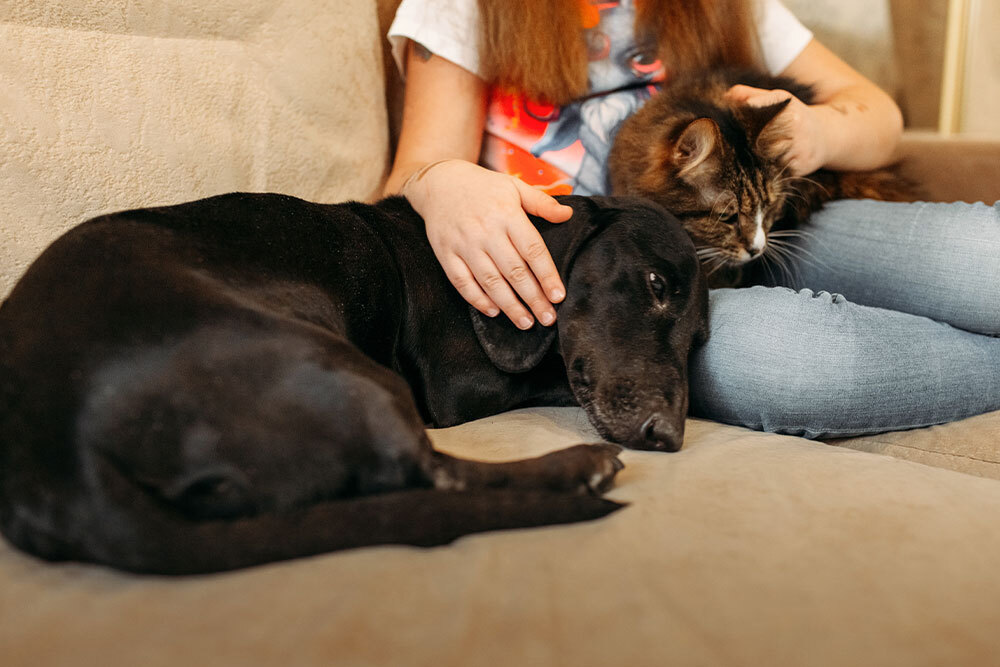
- Gentle family closeness- sitting near your pet, speaking to them quietly, being present- offers real comfort without demand
Coping With Pet Loss
Supporting Every Family Member
Grief after losing a pet is real grief. The bond between people and their animals is genuine, and losing that bond deserves to be taken seriously regardless of what others say about it being “just a pet.” There is no timeline, no right way, and no wrong way to grieve.
Children often understand loss more deeply than adults expect. Honest, age-appropriate conversations serve them better than avoidance. Helping children cope with pet loss involves openness, ritual, and permission to feel whatever they feel. Other pets in the household may also show behavioral changes after a companion’s death, and those responses deserve attention and gentle support.
Support Resources
- Pet loss resources and support from trusted veterinary institutions offer both information and community connection
- The Association for Pet Loss and Bereavement provides online forums and peer support for people navigating grief
- Professional grief counseling is a legitimate and valuable option; the grief that follows losing a beloved animal companion is worth taking seriously and addressing with real support
Finding Closure and Creating Meaning
Rituals help many families find their footing after loss. Photo books or memory boxes, planting a tree or garden in your pet’s honor, a donation to an animal rescue or veterinary research organization, or a walk to a favorite place your pet loved- none of these will erase the grief, but they give it somewhere to go.
Supporting Your Pet’s Final Chapter
The best end-of-life care brings medical understanding and emotional wisdom together. It means watching carefully, acting proactively on pain, making honest assessments, and letting love guide the decision when the time comes.
At State of the Heart Veterinary Care, we are here for that entire journey. Reach out to our Denver team or call (720) 543-2320 whenever you need to talk- whether that conversation is about quality of life tools, palliative care options, aftercare decisions, or scheduling a final appointment. We will walk with you through all of it.