If your veterinarian has brought up senior screening, the likely outcome is more comfortable years for your dog or cat, not fewer. Kidney disease, thyroid disease, heart disease, and high blood pressure all start quietly, and all four are far easier to manage when they are found before your pet feels sick. An early result usually means a diet change, a daily medication, or a recheck every few months, not a crisis. Dogs and cats are generally considered seniors around age seven, sooner for large breeds, and that is the point where routine labs and imaging start earning their keep.
State of the Heart Veterinary Care in Denver tailors senior screening to your individual pet rather than running one fixed checklist, and our wellness exams get more thorough as your dog or cat ages. When bloodwork or an exam finding points somewhere specific, we can follow it with digital X-rays, ultrasound, and blood pressure checks, and a visiting specialist can run an echocardiogram or ECG if the heart is the question. Same-day appointments are available when something needs attention quickly. If your pet is heading into their senior years and you are not sure where to start, ask us what to test first.
What Screening Catches Before Your Pet Feels Sick
- The screening core is blood work plus a urine check plus a blood pressure reading; imaging and cardiac testing join in when the exam points that way.
- Kidney disease, thyroid disease, heart disease, and hypertension all cause real damage before your pet acts sick, which is exactly why we test dogs and cats who look great.
- Comparing this year’s numbers to last year’s often tells us more than any single result, so a screening plan is built over time rather than in one visit.
Why Isn’t One Yearly Visit Enough After Age Seven?
A year is a long stretch for a senior dog or cat, closer to five or six human years of change. Age itself isn’t a disease, but it changes the odds, and preventive testing is how kidney, thyroid, and heart problems get caught while a dog or cat still looks and acts completely fine.
An exam catches what hands and eyes can catch: a new murmur, a lump that wasn’t there in March, stiffness in the hind end, a tooth that’s finally given up. What a physical can’t reach is a kidney quietly working at half capacity, or a thyroid gland that started overproducing sometime last winter. That’s the gap screening fills.
The other argument for twice-yearly wellness exams is the trend line. A creatinine of 1.5 tells one story by itself and quite another if it read 0.9 two visits ago. Both numbers can sit comfortably inside the normal range while the direction tells the real story.
What Goes Into a Senior Screening Plan?
Senior pet care recommendations put blood work, urinalysis, and a blood pressure reading at the center of every senior visit, with imaging and cardiac testing layered on when the exam or the trend line calls for it.
From there it gets personal. A twelve-year-old cat losing weight needs a different workup than a nine-year-old Lab with no symptoms or a ten-year old Chihuahua with a mild cough, and neither one needs everything on the menu. Our veterinarian’s expertise shapes those plans, which usually means fewer tests than a fixed checklist would run, chosen more deliberately and personalized to your pet.
What Can Blood Work Show Before Your Pet Seems Sick?
Blood work lets us watch how the inside of your pet is running without going in after it. A small sample shows how the kidneys are filtering, how the liver is coping, and whether a thyroid gland has drifted off course, often months before anything changes at home.
| Test | What it measures | What it can catch early |
| Complete blood count | Red and white cells, platelets | Anemia, smoldering infection or inflammation, certain cancers |
| Chemistry panel | Organ values, protein, electrolytes, blood sugar | Kidney disease, liver changes, diabetes, dehydration |
| Thyroid testing | Circulating thyroid hormone | A thyroid running low in dogs or high in cats |
| Heartworm and tick-borne panel | Antigen and antibody markers | Heartworm, Lyme disease, anaplasmosis, ehrlichiosis |
A normal panel at seven isn’t a wasted panel. It becomes the reference point every later result gets measured against, and it’s the reason a mildly odd value at eleven can be interpreted instead of guessed at.
Why Do We Check Blood Pressure on Older Pets?
Blood pressure gets checked because hypertension in older pets usually rides along with another disease, most often kidney trouble or an overactive thyroid. It rarely has obvious symptoms early on, and by the time a detached retina steals vision overnight, the kidneys, heart, and brain have usually been under quiet strain for months.
The test is easier than most families expect. A small cuff goes on a front leg or the base of the tail, and we take several readings and average them, because they can be affected if your pet is nervous. Blood pressure monitoring takes only a few minutes and doesn’t hurt.
When the numbers run high, treatment starts with whatever is driving them. Settling a cat’s thyroid levels or slowing kidney decline often brings pressure down on its own. If it doesn’t, a daily medication such as amlodipine or telmisartan usually will, and we recheck to confirm the dose is doing its job rather than assuming.
What Can a Urine Sample Tell You That Blood Work Can’t?
The kidneys lose their ability to concentrate urine before any blood value moves, which is exactly what a urinalysis picks up, along with glucose, protein, crystals, and infection in the same sample. It answers questions a blood draw simply can’t reach on its own.
Read side by side, the two tests separate problems that look identical from the outside. A high kidney value with dilute urine points toward failing filtration. That same value with nicely concentrated urine often means your dog was just short on water. Sugar in the urine plus sugar in the blood is diabetes; sugar in the urine alone is something else entirely.
How Do We Screen a Heart That Still Sounds Fine?
Screening a normal-sounding heart means looking for strain a stethoscope can’t hear.
- Chest X-rays: they show heart size and shape, and whether fluid has begun backing up into the lungs.
- Echocardiogram: an ultrasound of the beating heart, measuring chamber walls, valve motion, and how well the muscle squeezes. A visiting specialist runs echocardiography and ECG here at the hospital, so most families don’t need a second trip across town.
- ECG: it records electrical rhythm and separates a harmless skipped beat from an arrhythmia worth treating.
- NT-proBNP testing: measures a protein the heart muscle releases when it’s stretched or working too hard, which makes a single blood draw a sensible first step when a murmur is new, or when a cat has no murmur at all.
None of it hurts, and most pets need no sedation and no needles past the initial blood draw.
When Does an Older Pet Need X-Rays or an Ultrasound?
Imaging comes in when the physical exam or the lab work raises a question numbers alone can’t settle, and radiography is usually the first look.
| Digital X-ray | Ultrasound | |
| Best at | Size, shape, and position of organs, bones, and joints | Internal architecture and texture of soft tissue |
| Common senior use | Enlarged heart, lung changes, bladder stones, arthritis, screening the chest for masses | Kidney structure, bladder wall, liver and spleen detail, guided sampling |
| What it asks of your pet | A minute or two of holding still or mild sedation | A shaved patch and a bit of patience |
We take digital X-rays right here in the building, and a visiting specialist brings ultrasound to us for the cases that need a closer look, so a thorough imaging workup usually stays under one roof.
Which Hormone and Organ Diseases Turn Up Most Often?
Four diagnoses account for much of what senior screening uncovers: an underactive thyroid in dogs, an overactive one in cats, chronic kidney disease, and liver changes. All four develop slowly, all four are easy to write off as aging, and all four are far more manageable when a lab result finds them first.
Thyroid disease in dogs: hypothyroidism in dogs looks a great deal like slowing down with age: weight gain without extra food, low energy, a thinning coat, and dull, flaky skin. An inexpensive daily thyroid tablet corrects it. Confirming it takes a full thyroid panel rather than one screening number, since illness elsewhere can drag that value down on its own.
Thyroid disease in cats: cats tend to go the opposite direction, and hyperthyroidism burns them down from the inside: a hungry, loud, restless cat who keeps losing weight while emptying the bowl twice a day. Options include a daily oral medication, a prescription diet, or radioactive iodine, the one treatment that resolves it outright; we refer radioiodine to a licensed facility and coordinate the details for you. Left alone, the condition drives blood pressure up and thickens the heart, so a cuff reading goes with every one of these diagnoses.
Kidney disease: chronic kidney disease is one of the most common diagnoses in seniors, especially cats. By the time increased thirst and weight loss are obvious at home, a large share of filtering capacity is already gone for good. Nothing gives that tissue back. A therapeutic diet, attention to hydration, phosphorus control, and regular rechecks routinely buy comfortable years instead of months.
Liver disease: the liver is quieter still. Enzyme elevations on a routine panel are often the only hint, arriving long before yellowed gums, a picky appetite, or vomiting. Some of those numbers reflect a medication or an illness somewhere else, so the next move is usually a recheck, a bile acid test, or imaging to sort out whether that organ is the problem or just reporting on one.
What Else Should We Be Watching for in Older Dogs and Cats?
Four more conditions drive most of the quality-of-life decisions in senior care: heart disease, cancer, arthritis, and dental disease. Each one is picked up by hands, images, or a careful history rather than a single lab value, and each responds far better to unhurried early treatment than to a middle-of-the-night crisis.
Heart disease: in small-breed dogs, mitral valve disease is the usual story, a slowly leaking valve that shows up as a soft murmur years before anyone notices a cough or a faster resting breathing rate. Large breeds lean toward dilated cardiomyopathy, where the muscle itself weakens, while cats trend toward hypertrophic cardiomyopathy, a thickened wall that can hide until a sudden crisis. Medication started at the right moment can push congestive failure meaningfully further down the road, which is the whole argument for testing a dog who still feels wonderful.
Cancer: age is the single biggest risk factor for cancer, which is why every senior exam includes running hands over every inch of your pet, and why a new lump gets tested instead of six months of watching. Lymphoma, hemangiosarcoma, and osteosarcoma each favor certain breeds, from Golden Retrievers to Boxers to the big-boned giants, and knowing your dog’s risks changes what we look for. Most masses we sample come back benign. Finding out takes minutes.
Arthritis: dogs get slow on stairs and stiff after a long nap. Cats almost never limp; they quietly stop jumping onto the counter or hide more. Monthly injectable medications are now available to help block arthritis pain, alongside daily anti-inflammatories, joint supplements, weight management, and simple changes at home like a ramp off the bed or a litter box with one low side. Human pain relievers stay off the table entirely; ibuprofen, naproxen, and acetaminophen can injure a dog’s or cat’s kidneys, gut, or liver in a single dose. Laser therapy and rehabilitation exercises help some pets as well, and X-rays confirm which joints are involved so treatment aims at the right place.
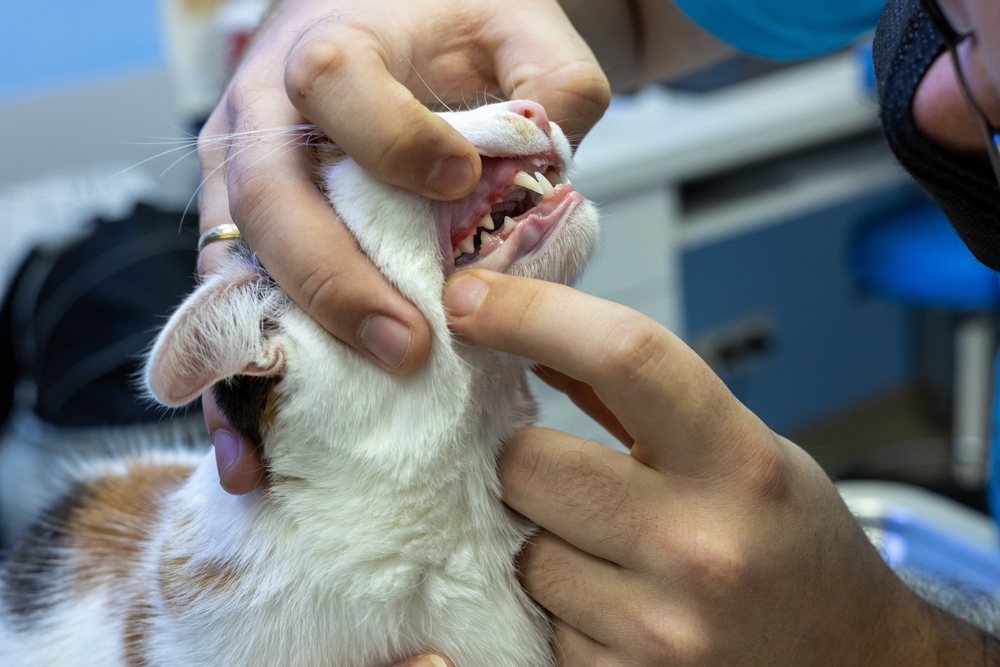
Dental disease: by seven, most dogs and cats carry some periodontal disease, and it doesn’t stay in the mouth. Bacteria under the gumline feed inflammation that reaches the heart, liver, and kidneys. Bad breath, dropping kibble, chewing on one side, or a dog who’s lost interest in tug all deserve a look. Cleaning below the gumline and imaging the roots, where most of the trouble hides, happens only during dental cleanings under anesthesia. At home, daily brushing does the heavy lifting, with dental diets and chews filling in around it.
Common Questions About Senior Pet Screening
Is my pet too old for anesthesia?
Age isn’t a disease, and it isn’t a disqualifier on its own. What matters is organ function, blood pressure, hydration, and whether the heart can handle it, which is precisely what screening tells us before we schedule anything. Pre-anesthetic blood work, a tailored drug protocol, IV fluids, and monitoring throughout make procedures reasonable for many senior patients. If something in the workup gives us pause, we’ll say so and talk through the alternatives with you.
Should my pet skip breakfast before their blood work?
Ask us first. For most panels, yes, a light fast of several hours gives cleaner chemistry and lipid results. Water stays available the whole time. Skip the fast if your pet is diabetic or on medication that needs food unless we’ve told you otherwise, and call ahead if you’re unsure. If you can collect a urine sample from the morning at home, bring it in a clean container; it saves your pet a step and often gives us the most useful reading.
What happens if a result comes back abnormal?
One odd number rarely means a diagnosis. Sometimes the answer is a recheck in a few weeks to see whether the value drifts or holds. Sometimes it’s a second test that looks at the same organ from a different angle, or an image to see what the number can’t show. We’ll explain what the result does and doesn’t mean, lay out the options with their trade-offs, and decide together what’s worth doing next for your pet and your household.
Where to Start With Your Senior Pet’s Screening
If your dog or cat is somewhere north of seven, the first step is small: one visit, an honest conversation about what’s worth testing for this particular pet, and a baseline to measure everything against. State of the Heart Veterinary Care in Denver would far rather find something early and boring than late and frightening, and we know “we should run some tests” can land as worrying news all by itself. Bring your questions, including the ones that feel silly.
Book a senior screening with us, and together we can keep your senior pet comfortable into their golden years.